Codes & Standards
New Jersey Adopts the 2024 Construction Codes
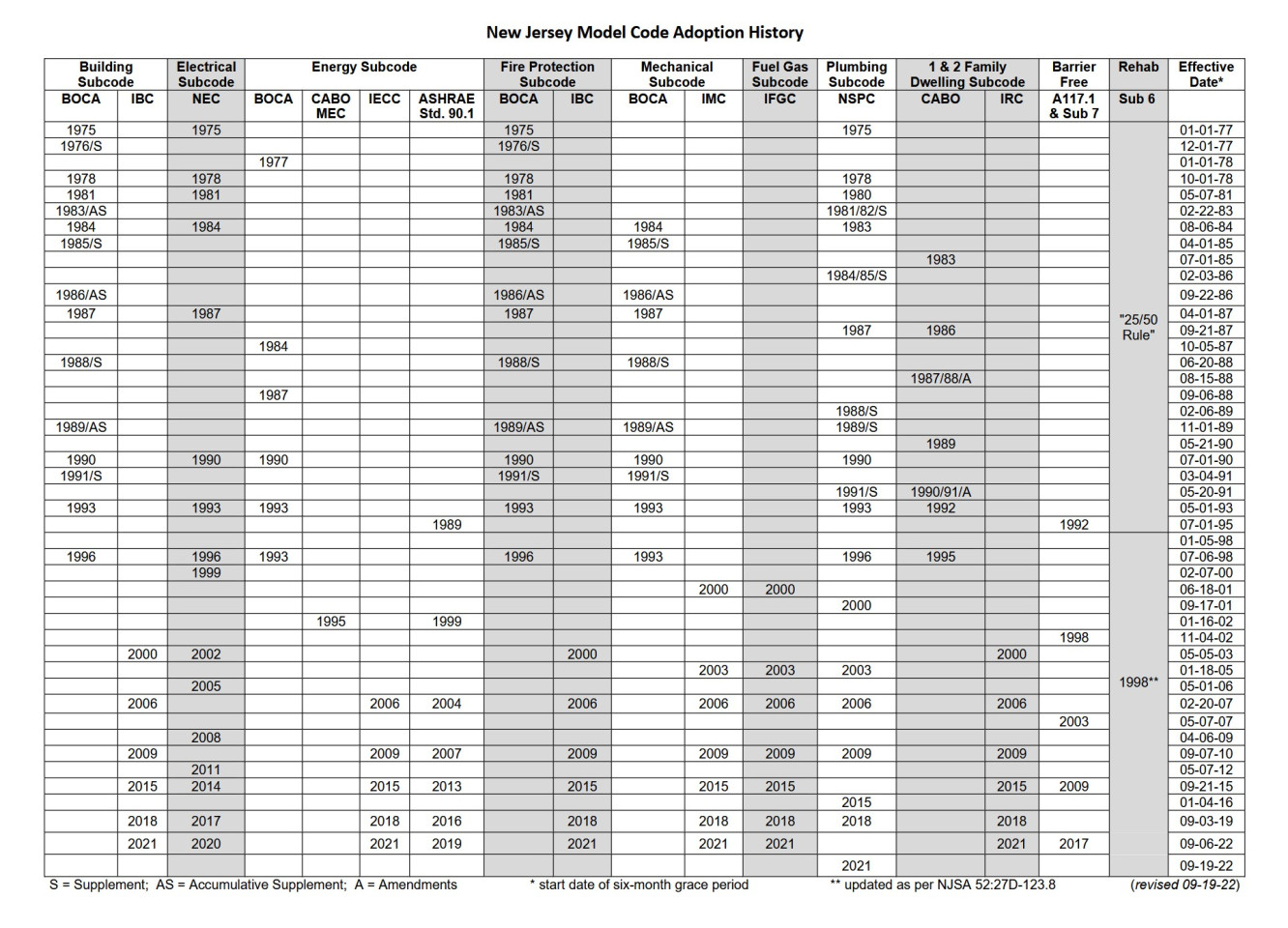
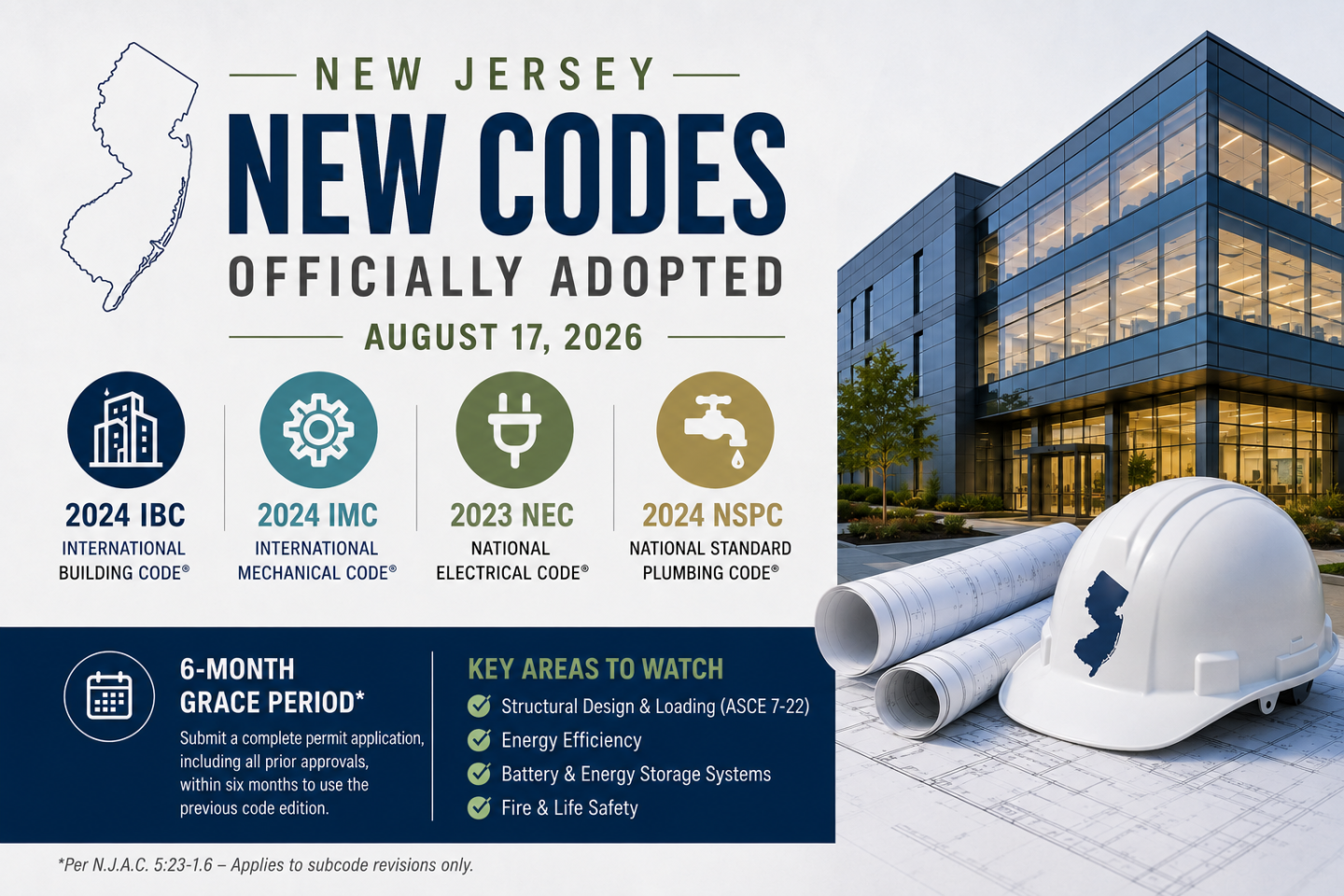
New Jersey has adopted the next generation of construction codes, bringing the State into the 2024 model-code cycle. The updated regulations incorporate the 2024 International Codes, together with the 2023 National Electrical Code (NEC) and 2024 National Standard Plumbing Code (NSPC), as modified by New Jersey.
For architects, engineers, owners, developers, and contractors with projects currently being planned or designed, the change warrants attention now. The applicable code edition can influence design criteria, documentation, construction cost, approvals, and permitting schedules.
Understanding the Six-Month Transition Period
New Jersey's Uniform Construction Code provides a six-month grace period following the operative date of a subcode revision.
During that period, applicants may continue to seek review under the immediately preceding code edition when a complete construction permit application, together with all required prior approvals, is submitted within the applicable grace period.
The key consideration is the status of the permit application—not simply whether design work began before the new codes took effect.
The grace-period provision applies specifically to subcode revisions. Accordingly, other amendments to the Uniform Construction Code should be evaluated separately to determine their effective dates and applicability.
Areas to Watch in the New Code Cycle
The 2024 code cycle introduces numerous technical revisions. Their significance will vary considerably depending on the building type, occupancy, scope of work, and project location.
Some areas deserving particular attention include:
- Structural criteria and environmental loads. Updated referenced standards, including ASCE 7-22, introduce changes affecting wind, snow, seismic, and other design loads.
- Energy performance. Revised energy provisions may affect exterior wall and roof assemblies, insulation, glazing, HVAC systems, electrical systems, lighting, controls, and related building-performance requirements.
- Battery and energy-storage systems. Requirements associated with lithium-ion batteries and energy-storage technologies continue to evolve. These provisions may be particularly relevant to industrial, warehouse, manufacturing, and other facilities involving battery storage, charging, servicing, or energy-storage installations.
- Fire and life safety. Changes throughout the code cycle affect fire protection, means of egress, hazardous materials, occupancy-specific requirements, and other life-safety provisions.
These are only selected areas of change. New Jersey also adopts its own amendments to the national model codes, making it important to evaluate both the underlying model-code provisions and the corresponding New Jersey modifications.
Consider the Code Strategy Before Permit Submission
Projects currently in design or nearing permit submission should be evaluated to determine which code cycle will govern and whether use of the six-month grace period is appropriate.
For some projects, completing the required prior approvals and submitting a complete permit application under the preceding code cycle may offer advantages. For others, proceeding directly under the newly adopted requirements may be the better approach.
There is no single answer for every project. Code applicability and permitting strategy should be evaluated based on the individual project's scope, design status, approval requirements, and anticipated construction schedule.
If you have a project currently in design, approaching permit submission, or being evaluated for code compliance, please contact us to discuss how the new code cycle and transition period may affect your project.